zaterdag 15 mei 2010

The Nakba and Israel: reality vs. myth


by Yassine Channouf
“And if all others accepted the lie which the Party imposed—if all records told the same tale—then the lie passed into history and became truth. 'Who controls the past' ran the Party slogan, 'controls the future: who controls the present controls the past.'" George Orwell, without knowing it, had cast a prophetic glance at the entity which proclaimed its independence in the same year he wrote his novel “1984”. On the 15th of May, 1948, under the portrait of the founder of the Zionist ideology Theodore Herzl, the first Israeli PM David Ben Gurion proclaimed the independence of the state of Israel on the ruins of Palestine. There was a rush of countries willing to recognize this newly founded state: the Soviet Union, America, Iran, Turkey, Belgium, the Netherlands, and many more hastened to the recognition of Israel. As the political leaders were busying themselves welcoming delegates from different countries and responding to telex-messages, the native Arab population of Palestine set out on a forced emigration that endures until the present.
For decades the historical version of the tragedy of the Palestinians, engraved in their hearts as the Nakba (Arabic for catastrophe), was only familiar to the Palestinians and other Arabs, in addition to certain intellectuals of revolutionary Third World countries. Because, in accordance to Orwell's logic, Israel possessed the 'present' since its eruption until the creation of a Palestinian resistance in 1967, and the second invasion of Lebanon in 1982, their version of history was accredited with the epitome 'truthful'. History is indeed written by the winners. Their attempt to destroy all facets of Palestine were considered legal, even praiseworthy. Golda Meir, strengthened in her ardor, could without remorse proclaim that 'there is no such thing as a Palestinian people'.
Alas for the descendants of Golda Meir and David Ben Gurion, their military supremacy did not last for long: it reached its limits. At the hands of a joint Palestinian-Lebanese resistance, Israel was checked in Lebanon and forced to retreat from most of the soil it had previously occupied. This invasion was supported by the United States, until evidence turned up of the massacre at the Palestinian refugee camps of Sabra and Chatilla -or what remained of these camps. Israels unswerving allies of the right-wing Christian Phalangist militia butchered under the watchful eye of the Israeli military more than 2000 Palestinian and Lebanese, after Beirut was cleansed of the Palestinian military presence. This opened the eyes of many around the world: from academics to activist to the general public. The righteous victims that the Israelis claimed to be aided brutal murderers? A drastic remise en question ensued on the topics of Zionism and Israel. But it was not until the rise of certain Israeli historians that even the most skeptic of Zionophiles frowned upon the official Zionist history of the Nakba.
In a country where servitude to the state is a virtue, the Israeli historians all ruminated the propagandistic version that was promoted by the state. A U-turn did occur in the eighties in the wake of the second Lebanon invasion, but the real reason behind this U-turn lies in the interplay between a nations image drastically being questioned and the release of the military archives of the late forties. A quick glance into these files shows unequivocally that millions of people were brainwashed for over 30 years. A new generation of historians, dubbed 'The New Israeli Historians' drastically rewrote the founding history of Israel, coming to terms with reality. They did not engage in such an endeavor because of their sudden found humanism, but rather, because the perversions were so clear that the official Israeli history was hardly worth the epitaph myth. Some of these New Israeli Historians are Avi Shlaim, Tom Segev, Benny Morris and Ilan Pape.
A moral dilemma was the result. Are we holding on to our criminal and blood soaked mythical version of history, or are we at least going to recognize the suffering of the Palestinians at our hands? All New Historians criticized Israel, albeit for different reasons. Avi Shlaim and Ilan Papé reproached Israel for the crimes it had perpetrated against the Palestinians: the massacres, the forced evictions, the rapes, etc. Benny Morris on the other hand criticizes the founding fathers for different reasons. The ethnic cleansing of Palestine was not only equitable, including all the rapes, the murders, the forced evictions, the dynamized graveyards, etc. which he sees as accidents de parcours. Rather, it was not enough! Israels ills are not that it cleansed more than 500 Palestinian cities and villages. Israels mistake is that it did not cleanse ALL Palestinian villages and cities from its original inhabitants. According to Morris, the Jews as a people gave more to the world than the Palestinians ever will. So they are entitled to drive out an entire people because of all they rendered the world. Morris expands this topic and states that the genocide on the American natives by the European colonists was completely legitimate, for the descendants of the European colonists gave the world more than the native Americans ever will in the realms of technology and culture. The Israeli public opted to go for the Benny Morris version of history. And Ilan Papé, the Israeli New Historian who criticized Israel for its massacres, rapes and plundering left Israel forever and stopped being a Zionists altogether.

Some falsifications:
No year has been so decisive for the history of the Palestinians as 1948. Therefore it is of immense importance to construct a just history based on facts in order to understand the Palestinian struggle. It is therefore incumbent upon any narrative of the Palestinian history to deconstruct certain notions and to purify it from all the taints and mythical falsifications.

A first blatant falsification is the claim that the British impeded the Zionist project of nation building, whereas the Palestinian national aspirations received all the British support. It was Great-Britain which enhanced the diplomatic chances for the survival of the Zionist project by issuing the Balfour declaration in 1917 and endorsing it actively. This ensured Britain's support for a Jewish national home, if it did not obstruct the rights of the indigenous population who remain nameless in this declaration which reads: '...His Majesty's government view with favour the establishment in Palestine of a national home for the Jewish people, and will use their best endeavors to facilitate the achievement of this object, it being clearly understood that nothing shall be done which may prejudice the civil and religious rights of existing non-Jewish communities in Palestine.' These nameless communities are the indigenous Palestinian Arab inhabitants that formed some 90% of the inhabitants of Palestine in 1917. The putting in practice of this endorsement already occurred in 1920, when the British firmly occupied Palestine militarily. They appointed Sir Herbert Samuel as the civilian High Commissioner. Herbert Samuel was not only Jewish, but an ardent Zionist. The British also provided the Zionists with military training, and turned a blind eye when the Zionists kept most of the equipment which they used in order to form their separate militias; Irgun, Haganah, Stern and Lehi. And last but not least, the Jewish minority composed mainly of newly arrived migrants from Eastern Europe were allocated a disproportionate amount of funds. This was the result of the clear British bias which led the Palestinians to boycott the politics of occupation.

A second fiction often narrated pertains the Palestinian leadership, or more precisely the lack of it. Zionist sources often attribute the failing Palestinian national project to the lack of any Palestinian popular power, or the existence of a Palestinian political elite. In hindsight, this argument is quite feeble, since it was this national Palestinian leadership with whom the first Zionist leaders tried to do 'business' with in the first place.
Great-Britain, a colonial power with two centuries of experience, mastered the old technique of divide and rule. It set up the two most influential Palestinian families against each other; the Husseinis against the Nashashibis, and set the Palestinian rural population up against the city dwellers. The Palestinian High Commissioner, who as mentioned before was a Jewish Zionist, appointed a Nashashibi to the important post of mayor of Jerusalem, and would counter his position by appointing a Husseini to another important post creating disorder in the Palestinian camp. The traditional equation was that the Husseinis, whose base of power was Jerusalem, would be alloted to post of mayor and the Nashashibis were traditionally granted the position of Mufti. The British occupation shifted this precarious balance. This ensured the domination of neither and the continuation of rivalries. It was not until the Palestinian Revolt of 1936, ignited by Izz al-Din al-Qassam, that the Palestinian upper-class was shook on its very foundations. Their inability to quell the Palestinian resistance led the British colonizers to conclude that this segment had become an irrelevant segment of Palestine. Thus, it forced those elements of the upper class who sympathized with the revolt to flee, while the revolting Palestinian peasants declared many areas liberated from both the colonizer and the notable families.
British intermingling and disrupting of Palestinian life even seeped through into the religious realm. It were the British who decided not to ratify an election and appointed Hajj Amin al-Husseini to the position of Mufti in 1921, despite him clearly losing the election among his peers. This ill-famed figure is incessantly mentioned by Zionists as the embodiment of all Palestinian evil. After the Palestinian Revolt of 1936 Hajj Amin fled to Nazi Germany where he sought asylum. He unequivocally supported the Palestinian uprising, and the British, in their corroboration of the Zionist nation-building process exiled, arrested or executed the Palestinian leadership. Naturally, Hajj Amin found refuge among Britain's enemies. It should not be forgotten that even Great-Britain sealed a deal with Nazi-Germany in 1938. This was the Munich Pact in which the British government reiterated their recognition of Nazi Germany and complied with Hitlers wish to annex (Anschluss) Czechoslovakia.
But it is troublesome to consider Hajj Amin a legitimate representative of the aspiration of his people. Let us conceive of an Italy being occupied by Lybia, instead of Libya being occupied by Italy. Imagine Libya appointing a pope to its liking. The new pope who has embraced Catholicism might even be George Bush Junior, and with his miraculous visions of God this pious ex-President agrees to serve the Libyan regime. What would the credibility be in case this scenario enfolds?
The Muslim leader of the Palestinian, if anyone is entitled to carry this title, was prior to the Great Revolt of 1936-39 none less than Izz al-Din al-Qassam. This religious activist fled occupied Syria in 1921 because of his anti-colonial activities which were deemed subversive by the French occupation. This cleric of high learning erected different cells independent of the nepotist urban elite led by the Nashashibi and Husseini clans. Izz al-Din was aware of the fact that peasants represent the true aspirations of the people in any authentic liberation movement. He died relatively early in the uprising he ignited, but his movement succeeded nonetheless in the temporal overthrowing of the Palestinian upper-class, and caused nightmares to the British who were impotent to extinguish the flames of a revolution. In 1939 the British reinforced their military presence in Palestine by sending a new contingent and allowing the Zionist militias to partake in the quelling of this resistance. The Royal Air Forces subjected the liberated Palestinian territories to increased bombardment. By 1948 the Palestinian political elite had been effectively eliminated after more than a decade of intimidation, imprisonment, exile or worse.

A third fiction is that the Palestinian community was a highly violent one which only understood the language of force. Their mistake was according to the Zionist historians that they only applied force in order to reach their goals. Nothing comes closer to the truth than the opposite of this statement. In fact, the longest non-violent collective action organized by any of the colonized peoples comes from the Palestinians. Prior to the great Revolt, in a period in which 3 quarters of the world was colonized, the Palestinians set a Gandhian example to the world worthy of emulation. The Palestinians organized in 1935 under the leadership of Izz al-Din al-Qassam a general strike that lasted for about 6 months. But just as in India this act of civil disobedience was harshly put down by the British and their Zionist allies. Colonialism has its particular methodology and colonized people alter their methods in correspondence with the reality on the ground. As Frantz Fanon points out: 'The existence of an armed struggle shows that the people are decided to trust to violent methods only. He of whom they have never stopped saying that the only language he understands is that of force, decides to give utterance by force. In fact, as always, the settler has shown him the way he should take if he is to become free. The argument the native chooses has been furnished by the settler, and by an ironic turning of the tables it is the native who now affirms that the colonialist understands nothing but force. The colonial regime owes its legitimacy to force and at no time tries to hide this aspect of things.'
A fourth fiction is that the Zionist settlers purchased most of the Arab land which became Israel in 1948. Indeed, they did purchase some land from the Palestinian bourgeoisie. This amounted in 1948 to some 6% of mandate Palestine over the course of 70 years. Continuing at this pace, the settlers would have purchased all of Palestine over a time span of 1100 years. So by the year 2982 the whole of Palestine would have become Jewish owned, or to remain in the field of the reasonable, by the year of 2500, these settlers would have constituted a majority in having purchased half the lands.

A fifth popular fiction is the Zionist claim that the War of Independence was a David vs. Goliath venture. The hungry and poverty stricken Jews who just survived a Holocaust faced several armies, who were better equipped and mustered more men to arms. As renowned scholar William Cleveland puts it: 'The legend of a defenseless, newborn Israel facing the onslaught of hordes of Arab soldiers does not correspond to reality. During the first round of fighting from May 15 to June 11, 1948, the combined Arab armies numbered around 21.500, whereas the Haganah and its affiliated units fielded a force of some 30.000... The Israelis entered the next round of combat (July 9-18) with markedly superior forces. The size of the Haganah was doubled and its firepower substantially increased.' The number of Arabs engaged in the fighting stagnated during the course of the war.
To put in proper perspective the poor performance of the Arabs in 1948 it is noteworthy that most Arab states were either still colonized, or were only granted independence shortly before the Nakba, after some crippling decades of colonialism and deprivation. The French occupiers only left Syria and Lebanon in 1946 after subjecting Damascus to a volley of rockets which killed some 500 civilians on the day they left that city. The Lebanese army was officially at war with Israel in 1948 but they never intended to cross into the territory of mandate Palestine. The Syrians sent some army units into Palestine but these were only limited numbers as the Syrian state and its apparatuses were still being built after several centuries of foreign domination. The largest Arab independent country was Egypt, but the only reason why the latter was granted independence by the British was on the condition that it would follow Great-Britain in its foreign policy. In addition to that, Egypt had to tolerate British military presence in the vicinity of the Suez-Canal, which is a highly strategic channel close to mandate Palestine. King Farouq nonetheless sent several hundreds of soldiers and irregulars into Palestine, but, as Jamal abd al-Nasser who participated in this offensive recollects: 'The Egyptian army at the time was made up of nine battalions. Only three of these were anywhere near the frontier when the order was given to enter Palestine ... There was no concentration of forces, no accumulation, no ammunition and equipment. There was no reconnaissance, no intelligence, no plans ...'. The terrible performance of the Egyptian army in 1948 was the main catalysis for the Free Officers Coup in 1952.
The role of Transjordan during the Nakba is the most interesting one, since the Arab Legion of Transjordan was by far the best equipped army that was engaged in battle with the Zionists militias. One anecdote will suffice to summarize the loyalty of its king Abdallah I to the Palestinian cause. Before sending in any troops Abdallah had been negotiating with Golda Meir in order to draw the future boundaries of the states of Israel and Transjordan. There was no mention of Palestine in the mind of Abdallah. He stated that he did not want to "resist or impede the partition of Palestine and creation of a Jewish state”. So before the start of hostilities, the strongest of Arab armies promised not to attack the area designated by the U.N. Partition Plan for a future Jewish state. The Yishuv had effectively neutralized the strongest Arab force before the fighting even started.
And then there was Saudi Arabia. This Kingdom announced it would also fight Israel. But as the previous head of Saudi Intelligence Ahmad Badieb states: Saudi Arabia told its citizens in 1948 that the Zionists would only occupy 5% of Palestine. There is no mention of any Saudi soldier who joined the Palestinian struggle in 1948.

The last and most poignant of Zionist distortions is the Palestinian refugee problem. Benny Morris, the most right-wing of the New Historians unambiguously claims that Plan Dalet was a campaign that 'provided for the conquest and permanent occupation, or leveling, or Arab villages and towns'. This was nothing nothing new. As David Ben Gurion, the leader of the Zionist Movement already proclaimed in 1938: 'With compulsory transfer we have a vast area [for settlement] .... I support compulsory transfer. I don't see anything immoral in it'. In order to secure as much land as possible for the nascent Jewish State, the Jewish minority had to get rid of the Arab Palestinian majority. To reach this end the Zionist militias did not shy away from as Ilan Pappe puts it '...bombarding villages, setting fire to homes properties and goods, expulsion, demolition and planting mines among the rubble to prevent any of the expelled inhabitants from returning.' This is only in addition to the numerous known cases of rape, the poisoning of water supplies, the dozens of massacres etc.
The massacre of Deyr Yassin in April 1948, so prior to the 'massive Arab invasion' is often seen as the perfect example of the putting in practice of Plan Dalet. The Irgun Militia, led by future Noble Peace Winner Menachem Begin, attacked the village of Deyr Yassin. This village was located in that part of Palestine that was designated for a future Arab state. Deyr Yassin also had a treaty with a nearby Jewish settlement which ensured their peaceful coexistence. But this is exactly why Deyr Yassin was attacked. It sent a clear message to the Palestinian cities and villages. No one is safe. The message was comprehended. This massacre, combined with many others of its kind, led many Palestinians to flee their native villages and cities. Zionists however have always claimed that it were the Arab invading armies that sent radio broadcasts to the Palestinian population urging them to flee. All New Israeli Historians deny this preposterous claim. The Palestinian exodus already took place prior to the so called Arab invasion of May 1948.
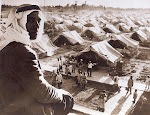
So despite the preponderance of evidence which suggests that the Zionists intended to transfer the Palestinian population to the neighboring states, as the contemporary Zionist leaders put so euphemistically, there are still certain 'historians' who claim that the Palestinian left on their own accord. Between 700.000 and 800.000 thousand Palestinians were evicted from Palestine in 1948. The United Nations General Assembly passed Resolution 194 on December 11, 1948, which goes:
'Resolves that the refugees wishing to return to their homes and live at peace with their neighbours should be permitted to do so at the earliest practicable date, and that compensation should be paid for the property of those choosing not to return and for loss of or damage to property which, under principles of international law or in equity, should be made good by the Governments or authorities responsible.'
Israel has yet to abide by the will of the international community and continues to act like a pariah state. They were able to conceal this for several decades. But no longer. George Orwell wrote that: 'In a time of universal deceit, telling the truth is a revolutionary act'. This is no longer necessary. The bulk of the world already knows it.

zaterdag 8 mei 2010

Statement on the occasion of the 65 anniversary of the Massacre of Sétif

The 8th of May marks Nazi Germany's capitulation. Exactly 65 years ago, the atrocious second World War ended and one of the most horrible chapters in human history was seemingly closed. But atrocity did not end with Hitler committing suicide on April 30th, nor with the unconditional surrender of Nazi Germany on May 8 1945. On that same day another event occurred that showed the true face of the victorious forces of Allied Europe. The French Free Forces butchered more than 30.000 Algerians in Sétif because they too wanted an end to oppression and colonization, and join the club of those who wanted to benefit from European universalism and emancipation in order to taste the sweet, yet exclusive fruits of freedom and equality.

The massacre of Sétif is hardly mentioned in our history books, but this occurrence is immortalized as the start of Algeria's war for independence. France genocidal counter effort to impede the Algerian's claim for nationhood and self-determination resulted in the death of 1.5 million Algerians and volunteers from neighboring countries, most of them arriving from Morocco. These martyrs of freedom and independence never received their due honor. No European power ever demanded the setting up of an inquiry into these horrible events. There never came any formal apology from the French government for their well recorded atrocities. The French equivalents of the Nazis who committed these crimes against humanity were never brought to justice.

Instead of facing a Nuremberg court these criminals are referred to as heroes and have received countless medals. Some of these criminals are Charles de Gaulle, Jean-Marie le Pen, Fernand Gambiez, Raoul Salan and Paul Aussaresses. Therefore, those who are still alive such Le Pen and Aussaresses must face trial willy-nilly. In imitation of the Eichmann and Pinochet trials, or the more recent Khmer Rouge trial in Cambodia, it is about time to set up an Arab tribunal with the explicit goal of arresting and bringing to court of every suspect of the colonial era in order to turn this dark page forever. All means are justified to force France and other European countries to pay compensations for the crimes they committed.

If these demands seem too radical, let us not forget what France claims to stand for. Let us not forget that it is this same France which was never done talking of Man, and never stopped proclaiming that they were only anxious for the welfare of Man. Today, more than any other day, we know with what sufferings humanity has paid for every of its triumphs.

Never to forgive, never to forget!


some of the scars of the French civilizational mission

woensdag 21 april 2010

Europe and the collective failure of its pro-Palestinian activists

by Yassine Channouf

April 17th marks Prisoners Day. The date can be held in two ways: just another of the days in which we focus on Palestine in addition to Land and Nakba-Day, ... or to perceive it as a unique occasion in which we highlight the plight of the most vulnerable of Israel's victims; the prisoners. Confined in their cells, surrounded by barbed wire, watchtowers, ditches, spending years away from their families, their voices are rarely heard. And as always, Israel is winning the propaganda war. It clamors for the release of its' lone prisoner G. Shalit, whose picture stands at life size in Rome, at the city hall with the inscription 'Rome wants its citizen Gilad Shalit free'.
The pro-Palestinian movement in Europe has come a long way from the confines of a politically polarized - and thus shallow and diminutive - cold war Europe. For example, the Dutch branch of the International Red Cross, the ideal standard in non-partisan humanitarian work, refused to collect blood for the Arab victims of the June War in 1967, no matter that Israel was the belligerent. At that time there was no pro-Palestine entity, no voice for the refugees to speak of. In fact, barely anyone knew what Palestine stood for. The exceptional actions of the PFLP and its splinter movement PFLP-External Operations, led by Wadi Haddad, changed this. These two organizations attempted to bring the plight of dispersed - or evicted - Palestinians to the world's attention, and succeeded.

Anno 2010, the pro-Palestinian movement has matured, but still lacks the impressive unity and organization of the Zionist lobby. Standing close to the Arab European League, notorious for its' official complaint to Belgium against Ariel Sharon for inciting genocide, I was able to judge the conduct of other so called pro-Palestinian movements. There are sharp rifts on critical issues; support for armed resistance, the how-many-state-solution, the position vis-à-vis the sanctity of the uncountable UN-resolutions. We have seen in the wake of the illegal invasion of Iraq a clear and unequivocal denouncement of this nascent calamity. This unanimity did not last long.

A Palestinian intifada which had become increasingly violent already split the movement in two. Those who were highly critical of the resistance shared many of the features of their leftist predecessors during the colonial era. Jean-Paul Sartre describes these paternalistic elements in his preface to Frantz Fanon's 'The Wretched of the Earth' as :' The Left at home is embarrassed; they know the true situation of the natives, the merciless oppression they are submitted to; they do not condemn their revolt, knowing full well that we have done everything to provoke it. But, all the same, they think to themselves, there are limits; these guerrillas should be bent on showing that they are chivalrous; that would be the best way of showing they are men. Sometimes the Left scolds them ... ‘you’re going too far; we won’t support you any more.’ The natives don’t give a damn about their support; for all the good it does them they might as well stuff it up their backsides. Once their war began, they saw this hard truth: that every single one of us has made his bit, has got something out of them; they don’t need to call anyone to witness; they’ll grant favored treatment to no one.' It seems that the European pro-Palestinian left cannot crawl out of their cocoon which perceives western values as culturally superior, and are adamant on imposing these values on the Palestinians; most importantly non-violence, and the sanctity of negotiations. The second variety of pro-Palestinian movements, which unequivocally supports armed resistance, have been called terrorists themselves, agents de provocateurs of Hezbollah and Hamas. As if these two liberation movements ever exported their armed struggle outside Occupied Palestine and Lebanon. Regardless of the accusations, it is to the latter of pro-Palestinian movements we want to be associated with. One that is not paternalistic about the Palestinian struggle for liberation and nationhood. It is also these factions that are showing their support on the most important occasions; Land Day, Nakba Day and Prisoners day.

During the third day, the most important of them all, our comrades from 'Action Palestine' will hold a demonstration in front of the Israeli embassy in London. In Belgium we, the League of Arab Students, have organized a symbolic manifestation in front of the European Commission. We took the conscious decision of placing the issue of Lebanese prisoner George Ibrahim Abdallah on the forefront. He is the last of the Arab resistance fighters who is imprisoned in France. This Lebanese Marxist revolutionary has been behind bars since 1984. He should have been released in 2003, but this negligence on the part of the French government is all the more poignant when compared to the efforts being made to secure the release of Gilad Shalit, who also carries a French citizenship. Therefore Hamas must include the forgotten George Ibrahim Abdallah in any future deal. It has a unique opportunity to transcend the scope of its resistance outside the geographical entity of Occupied Palestine, or its Islamism. Demanding the release of a Lebanese Marxist revolutionary in France signals an important shift for Hamas, as this could result in an implicit recognition of its movement. It would also be a triumph for the Lebanese people, as they rejoice for the return of one of their citizens. And from our point of view as activists in Europe, it may blur our collective failure as a shattered and divided movement.

zondag 18 april 2010

Palestinian Prisoners Day: Report of our solidarity gathering


The 17th of April marks Palestinian Prisoners Day. As the League of Arab Students considers and defends the Arabness of Palestine alongside the plight of struggle with its people towards the liberation of Palestine, it was more than our plight to organize a demonstration against the imprisonment and violation of the basic human rights of our brave and steadfast Palestinians.

On this symbolic day, members of the League of Arab Students and other activists gathered in front of the European Commission in Brussels. We urged that the European Union should immediately take sanctions against 'Israel' to end its suffocating blockade of the Gaza Strip and release our Palestinian prisoners who are year by year subjected to torture, deprivation of medical treatment, isolated confinement, deliberate killing and to other inhuman treatments by these Zionist occupiers. Brahim Harchaoui, spokesman of the League of Arab Students, held a speech in which he insisted on the fact that the strive for the release of the Palestinian prisoners is an important constituent in the Palestinian issue. He also clarified what we, as the common people and the authorities, can and should do to contribute to the struggle to set free Palestine. With megaphones, slogans, flags and so on, every person present showed that he repudiates the supine attitude of the authorities towards the physical and mental abuse, massacre and exile of the Palestinian people.

As the League of Arab Students, we will continue this struggle in order to set free Palestine and liberate our Palestinian prisoners. We also fiercely condemn the indifference which is widely prevalent among the Arab regimes and all kinds of normalization with the Zionist entity. We call up all Arabs to unite in order to fight against the worsening of this Zionist aggression.

The League of Arab Students in Europe

http://arabstudentsleague.blogspot.com

zaterdag 17 april 2010

رابطة الطلاب العرب في أوربا تخلد يوم الأسير الفلسطيني


في الذكرى 36 لإطلاق سراح أول أسير فلسطيني التي تصادف 17 أبريل من كل سنة، نظمت رابطة الطلاب العرب في أوربا – فرع بلجيكا- وقفة تضامنية مع الأسرى الفلسطينيين أمام المفوضية الأوربية للإتحاد الأوربي بمدينة بروكسيل لتسليط الأضواء على محنة الأسرى الفلسطينيين داخل معسكرات الاعتقال الصهيونية.

وقد شارك في هذه الوقفة الرمزية العشرات من الطلاب من جنسيات عربية مختلفة رفعوا خلالها شعارات منددة بالعدوان الصهيوني تجاه الشعب الفلسطيني عامة و الأسرى على وجه الخصوص. وخلال كلمته التي ألقاها بين المتظاهرين، صرح المنسق العام للرابطة الرفيق إبراهيم حرشاوي بالمسؤولية الملقاة على عاتق الجالية العربية و المسلمة المقيمة بأوربا تجاه القضية الفلسطينية وركز خصوصا على الدور المحوري الذي يجب أن تلعبه النخبة السياسية الأوربية من أصول عربية داخل مؤسسات صنع القرار الأوربي من أجل اتخاذ مواقف حازمة تجاه إسرائيل بغية إطلاق سراح الأسرى الفلسطينيين على غرار ما يقوم به اللوبي الصهيوني بأوربا لحشد الدعم لإطلاق سراح الجندي الإسرائيلي جلعاد شاليط المعتقل لدى حركة المقاومة الإسلامية حماس.

وفي هذا الصدد شدد حرشاوي في كلمته على تواطؤ الإتحاد الأوربي مع المحتل عن طريق الدعم الاقتصادي والسياسي و الانحياز المكشوف الذي يتجاهل القانون الدولي وكل القرارات الأممية، في حين أنه يتوجب على أوربا على الأقل أن تكون محايدة في الصراع العربي-الإسرائيلي وأن تقوم بما تقتضيه مبادئ الديمقراطية وحقوق الإنسان التي تؤمن بها أوربا.

وفي الختام أكد حرشاوي على أن حل قضية الأسرى واللاجئين وتحرير فلسطين من البحر الأبيض المتوسط إلى نهر الأردن هو بيد الشعب العربي ونخبته الغيورة و لن يكون إلا بالمقاومة بجميع أشكالها.

www.arabstudentsleague.blogspot.com

dinsdag 13 april 2010

Report of our 'Arab World' Quiz


Report of our 'Arab World' Quiz

Tuesday the 6th of April, the League of Arab Students was pleased to welcome her members and other guests on her Arab World Quiz! As our principles lay the foundation of all our activities, the main goal of this quiz was to revive the Arabic language and Arab-Islamic culture among our youth. Therefore the quiz was logically held in Dutch and Arabic.

We started off by introducing our principles which are the backbone of our league. Subsequently two of our members enthusiastically presented the quiz. The participants were thrown questions at that went from general knowledge to the Arabic language, history, politics, music and much more. In the course of the quiz, we saw some people frown of concentration when tougher questions were put to them, but chiefly a lot of laughing was going on, everyone seemed genuinely to enjoy. During the break, the students were given the oppurtunity to have a conversation and get acquainted with each other. After the break, the correct answers were given and the winning group was announced.

At the end of the day, we can undoubtedly say that it was a great succes and we are motivated to organize more events in order to unite our Arab students. We would also like to thank everyone who was present and who contributed to what we may truthfully call a highly pleasant and educative day.

The League of Arab Students in Europe

maandag 12 april 2010

Verraad van sheikh al-Ariefi


Onder het mom van het 'steunen van Palestina' wilt Mohammed al-Ariefi zijn wekelijkse televisieprogramma presenteren in Jeruzalem. Enkele maanden geleden organiseerde de lokale jongerengroep Jongeren Voor Islam in samenwerking met Said Mdaouchi een lezing met de Saudische geestelijke al-Ariefi in Antwerpen. Said Mdaouchi, een kopstuk van de moskeeverenigingen, picknickte enkele jaren geleden met zionistische rabbijnen in Antwerpen. Meer dan genoeg redenen dus om deze al-Ariefi te ontmaskeren.

Eerst en vooral behoort deze al-Ariefi tot die bende Saudische geleerden die in 2006 Hezbollah weigerden te steunen tegen de Israëlische agressie in de zomer van dat jaar. Hij raadde ook aan andere moslims dit niet te doen. Na die eerste flirt met de Zionistische entiteit Israël hebben de terroristische staat en deze staatsgeleerde een afspraak gemaakt in Jeruzalem. Zoals vaak wordt de Palestijnse zaak als excuus gebruikt om de nationale agenda van de reactionaire regimes te dienen. Een veel voorkomend voorwendsel dat wordt gebruikt om bruggen te slaan met de zionistische vijand zijn de zogenaamde inter-religieuze dialogen met zionistische joden. Zo heeft het welbekende hoofd van Al-Azhar, sheikh Tantawi, een joviale ontmoeting gehad met de massamoordenaar en president van de zionistische staat “Israël” Shimon Peres. Saudi-Arabië, net als Egypte vroeger, toont zich meer dan bereid vrede te sluiten met Israël. Getuige hiervan is haar herhaaldelijke allesomvattende vredesinitiatief dat gelanceerd werd door Saudi-Arabië in 2002. Indien Saudi-Arabië haar zin had gekregen dan zou "Israël" blijven bestaan tot in de eeuwigheid, zonder de belangen van de Palestijnen in acht te nemen. Overigens heeft Saudi-Arabië nooit één schot gelost ter ondersteuning van de Palestijnse zaak. Zij zijn wel altijd de eerste om de Palestijnse verzetsstrijders te bekritiseren. In de jaren '70 waren de Palestijnse verzetsstrijders 'ongelovige communisten'. Na de islamisering van het Palestijnse verzet werden ze moslimextremisten en 'terroristen'.

Deze reeks voorbeelden van verraderlijke toenaderingen met de Zionistische vijand tonen aan hoe religie hier wordt misbruikt om de politieke agenda van de Amerikanen en de zionisten te implementeren in onze regio in naam van de islam. Vele van onze jongeren die terecht een zoektocht beginnen naar hun religieuze achtergrond belanden heel gemakkelijk bij deze dociele, dogmatische en extremistische vorm van de islam via propagandaboekjes. Deze versie van de islam wordt gespreid in Europa en wordt gefinancierd door Saudische petrodollars. Als progressieve studentenbeweging roepen we onze jongeren en studenten op om waakzaam te blijven en een kritische houding aan te nemen tegenover deze figuren, groeperingen en tendensen. De islam, net als elke andere religie, kan een bevrijdende en progressieve dimensie hebben. Maar aan de andere kant kan het ook als een drug worden gebruikt om de mensen te manipuleren en achter een bepaalde politieke agenda te scharen.

Een geleerde als al-Ariefi is zich wel degelijk bewust van de politieke agenda van Saudi-Arabië. De leider van dat land gaat prat op zijn titel van 'Khadim al-Haramayn', maar zodra er één geleerde uit de pas loopt belandt deze onder de beschuldiging van terrorisme in de gevangenis. We hopen dat de moslimgeleerden ooit hun rol zullen opnemen om de moslims te mobiliseren om het onrecht te bestrijden die onze natie wordt aangedaan. Maar zolang deze geleerden verbonden zijn aan een staat die normalisatie met Israël als een prioriteit ziet kunnen we niet dan concluderen dat deze geleerden het meest de rol van de duivel op zich nemen, terwijl ze zich huldigen in de gewaden der heiligen.

De Liga van Arabische Studenten in Europa
www.arabstudentsleague.blogspot.com

maandag 5 april 2010

"Rassemblement à l'occasion du "Jour des Prisonniers Palestiniens"


"La Ligue des étudiants arabes en Europe" vous invite à participer à une manifestation statique et symbolique organisée à l'occasion du "Jour des Prisonniers Palestiniens" sur la commune de Bruxelles-ville dans le quartier européen.

Nos objectifs visés:

-insister sur le fait que le sujet des prisonniers est un élément constitutif dans la question palestinniene, tout comme la liberation de la terre et le droit au retour.

-prendre en faveur tous les moyens appliqués en voie de libération des prisoniers palestiniens, et surtout le ravissement des soldats sionistes

-demander avec insistance que l'Union Européen prenne des sanctions contre Israel et que le blocus pris contre Gaza soit levé

-nous condamnons l'indifférence chez les regimes Arabes et toutes sortes de normalisation avec l'entité sioniste et appelons aux Arabes de se réunir pour battre contre l'aggravement de l'agression sioniste

L'heure de départ: 14h00 jusqu'a 15h30
Où?: Rond-point de Schuman à Bruxelles
Quand ? Samedi, le 17 Avril 2010

dinsdag 30 maart 2010

The League of Arab Students presents... THE ARAB WORLD QUIZ


Wanneer: dinsdag 6 april, 14 u30.
Waar: zaal Rubens, statiestraat 175 2600 Berchem
Groep: 4 personen
Inkom: 2 euro per persoon
Inschrijven: groepsnaam doorsturen of bellen naar:

bouchra_grich@live.be 0485 04 83 50

http://www.arabstudentsleague.blogspot.com/

dinsdag 23 maart 2010

Elections régionales en France Mars 2010


Par Ihsen Youssef

Les élections régionales en France sont finies et le parti du peuple (la gauche unie) est sorti triomphant avec la quasi-totalité des régions (21/22 en métropole). Malheureusement, les membres du gouvernement de droite ont à nouveau réitéré leur volonté de durcir d'avantage leur politique envers les immigrés et les minorités afin de réessayer de siphonner la base de l’électorat de l’extrême droite xénophobe. Mr Copé (chef de file du groupe UMP à l’assemblée nationale Française) et en interprétant, sur le plateau télé de France 2, ce résultat catastrophique pour la droite, a pris un raccourci en annonçant que le gouvernement va voter dès lundi une loi pour interdire le Burqua. Je ne suis pas spécialement fan du burqua ou tout autre signe de la soumission de la moitié de la société mais je trouve ridicule une telle manœuvre.


Ces dernières années de gouvernance de la gauche dans les régions de France a été synonyme d'une amélioration notable des aides apportées à la recherche publique avec une augmentation du nombre des bourses doctorales et postdoctorales ainsi que les dotations pour les laboratoires universitaires. Ces aides restent bien évidemment insuffisantes les coupes budgétaires considérables que le gouvernement a pris en réduisant les dotations ministérielles pour les universités et les laboratoires (voir un article publié en 2006 dans le journal scientifique Nature).

Ce changement de politique envers la recherche scientifique en France signifie que les étudiants étrangers francophones dont une majorité de maghrébins et en moindre importance les syriens et les libanais, vont avoir plus de mal à pouvoir venir en France pour terminer leurs études universitaires. Un tel changement représente bien évidemment un gain d’intérêt pour les universités des pays anglophones. De telles évolutions doivent absolument inciter les pays arabes à revoir leurs politique en terme d’enseignement des langues étrangères afin de faciliter la mobilité des étudiants arabes et leur faciliter la tâche pour poursuivre leurs formation dans les université internationales anglophones.


La ligue des étudiants Arabes en Europe
http://arabstudentsleague.blogspot.com/

zaterdag 20 maart 2010

Wat bindt Marokkanen met Palestina ?


Door Brahim Harchaoui

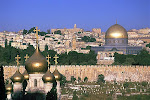
De historische band tussen Marokko en Palestina is er één die dateert van eeuwen voor de creatie van de zionistische staat. Al in de 12de eeuw lieten de Marokkanen zich gelden in de strijd om het heilige land. Ze vormden een belangrijk onderdeel van het leger van de legendarische Saladin tijdens de beslissende Slag bij Hattin, die erin slaagde de kruisvaarders te verdrijven uit Jeruzalem en een groot deel van Palestina. Eén van de historische overblijfselen van dat tijdperk is de Marokkaanse wijk in Jeruzalem, die voornamelijk bewoond werd door Marokkaanse strijders en pelgrims die zich in Palestina vestigden. Deze wijk grensde aan de Al-Aqsamoskee en vormde één van de toegangen van deze constructie. Vervolgens schonken de Ayyubiden deze wijk aan de Marokkanen in de vorm van een religieuze gift(waqf ) als beloning voor de dappere weerstand die deze boden aan de kruisvaarders. Toen aan Salahdin door zijn metgezellen gevraagd werd waarom hij de Marokkanen aan de Al-Aqsa Moskee had gehuisvest antwoordde hij : “ Ik vertrouw de veiligheid van deze stad en heilige moskee toe aan mensen die hun standvastigheid en onversaagdheid op land en op zee hebben laten gelden”. De Marokkaanse wijk of “Hareth al Maghariba” was sindsdien één van de historische bezienswaardigheden van Jeruzalem die samen met de Rotskoepel- en Alqsa moskee, de Arabisch-Islamitisch identiteit ervan symboliseren. Iets meer dan veertig jaar geleden voltrok zich een drama toen de zionistische burgemeester,
Teddy Kollek, de fysieke Marokkaanse aanwezigheid in Jeruzalem trachtte weg te zuiveren uit de annalen van de geschiedenis. Alle 650 inwoners van de Marokkaanse wijk werden tijdens de eerste dagen van de Zesdaagse oorlog gewapenderhand gedeporteerd terwijl hun huizen met de grond werden gelijkgemaakt. Hiermee werd de bezetting en verjoodsing van Oost-Jeruzalem ingeluid. Maar ondanks deze afschuwelijke zuiveringsoperatie vinden we overal in Palestina nog steeds typische Marokkaanse familienamen terug zoals El-Tijani, El-Maslouhi, El-Filali en
El-Tazi etc..

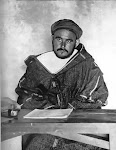
Het is gepast om in dit verband te verwijzen naar een andere fase in de geschiedenis. Iedere Marokkaan kent wel de geschiedenis van de Amazigh Abdelkrim Elkhattabi die als vrijheidsstrijder de wapens opnam tegen de Spanjaarden in de Rif-regio, wat resulteerde in de verpletterende overwinning op de Spanjaarden in de Slag bij Anwal in 1921. Maar Abdelkrim was meer dan een lokale vrijheidsstrijder. In 1948 mobiliseerde hij een hele Maghrebijnse éénheid om de wapens op te nemen tegen het pas ontsproten kankergezwel “Israël” . Honderden Maghrebijnen, onder wie tientallen Marokkanen, kwamen zich aanmelden in het hoofdkwartier van het Comité voor de Bevrijding van de Arabische Maghreb in Cairo. Daarnaast had Abdelkrim een adviserende rol als voorzitter van dat Comité en probeerde hij zijn ervaringen als succesvol guer- rillaleider in de Rif te vertalen naar militaire verwezenlijkingen op het front. Naast deze nobele rol van Abdelkrim loont het de moeite om één van de vele vergeten Marokkaanse vrijwilligers op te noemen die in het verlengde van Abdelkrims rol in de eerste Arabisch-Israëlische oorlog, hun leven hebben opgeofferd aan de Palestijnse kwestie.

De in Asilah geboren Abdelrahman Amezghar is één van hen. Als lid van het Arabische bevrijdingsfront dat een onderdeel vormt van de Pan-Arabische Baath-Partij voerde
hij een commando-operatie uit op 15 juni 1975 met een nederzetting ten noorden van Kiryat Shmona als doelwit. Deze confrontatie met de bezettingsleger duurde ongeveer
zes uren en resulteerde uiteindelijk in het martelaarschap van deze 4 vrijheidsstrijders. Bij de vijand vielen 25 doden en meer dan 57 raakten gewond. Deze heldhaftige operatie die menig Marokkaan vervult met fierheid is geen uitzondering. Tal van Marokkaanse namen kunnen opgenoemd worden die zich hebben aangesloten bij het Palestijns verzet o.a. :

-Mustapha Kzibr: een van de Marokkanen die zich aansloot bij het PFLP. Hij stierf op 2 februari 1994 in een confrontatie met het bezettingsleger. Zijn lichaam werd
naar Marokko gerepatrieerd in het kader van de uitwisseling van gevangenen en lijken tussen Hezbollah en de zionisten in 2008.

-Elhashemi Eltaoud: hij nam als vrijwilliger deel aan de eerste oorlog onder leiding van Abdelkrim Elkhattabi en raakte gewond tijdens de gevechten in 1948 ten zuiden van
Gaza. Hij leeft momenteel in Marokko.

-Hussein Eltangaoui: een ingenieur die zich aansloot bij het PFLP. Hij heeft aan verschillende operaties deelgenomen en stierf tijdens gevechten in Hoog-Galilea in
1974. Bovendien was hij goed bevriend met PFLP-leider George Habash.

Ondanks de bovengeschetste geschiedenis, luiden er hoe langer hoe meer Marokkaanse stemmen die pleiten voor een normalisatie met de zionistische entiteit. We zien
vooral bepaalde elementen van de Amazigh beweging en de hogere kringen van de Marokkaanse staat verraderlijk flirten met de zionisten. Regelmatig worden Tzipi Levni, Amir Peretz en andere zionistische criminelen openlijk en minder openlijk ontmoet in het kader van economische en politieke betrekkingen.
Bovendien merken we op dat diezelfde verraderlijkheid doorsijpelt bij het Marokkaanse middenveld in de diaspora. Onder het mom van interreligieuze dialogen en
andere valse voorwendsels bouwt men bruggen met de belangenbehartigers van de zionistische entiteit. Anderzijds is er nog hoop. We zien dat een verpletterende
meerderheid van de Marokkanen - zij het in diaspora of in Marokko- nog steeds de Palestijnse zaak als de meest prioritaire kwestie omhelzen. Dit kan voornamelijk
verklaard worden door de verbondenheid tussen de Palestijnen en de Marokkanen die als een rode draad door de geschiedenis loopt en die nog wordt versterkt door
een gemeenschappelijke taal en religie. Om deze historisch diepgewortelde band van strijd en martelaarschap, die blootgesteld is aan memoricide, te behouden, dient de
Pan-Arabische en Islamitische dimensie van de Palestijnse zaak te worden geaccentueerd in woorden en daden.

De Liga van Arabische Studenten in Europa

zaterdag 13 maart 2010

Een kennismaking met Gibran Khalil Gibran


Door Illias Elmouden

Op 6 januari 1883 schonk de Libanese schone Kamila Jibran het leven aan een jongen, Khalil. Hij groeide op in Bsharri, een noorderlijk christelijk gebied in Libanon, een toenmalige provincie van het Grote Syrië, dat aan de Ottomaanse heerschappij onderworpen was.

Wegens de armoede, waarmee de Jibran-familie te kampen had, was het niet mogelijk voor hem noch zijn broertjes en zusjes om naar school te gaan. Dat was echter buiten de lokale priester gerekend, die hem de essentie van de Arabische taal en schrijfkunst leerde. Toen ging er voor Khalil een wonderbaarlijke wereld open: die van de letteren. Door zijn grote liefde hiervoor, werd zijn lotsbestemming reeds op jonge leeftijd bepaald.

Het geluk bleef echter niet duren: zijn vader werd veroordeeld voor fraude en werd opgesloten. Tot overmaat van ramp nam de Ottomaanse autoriteit alle bezittingen van de familie Jibran af en werden ze verbeurd verklaard. Ondanks de vrijlating van zijn vader, was voor Kamila de maat vol: ze naam haar kinderen mee naar haar broer, gevestigd in de Verenigde Staten van Amerika.

De toenmalige grootste Arabische gemeenschap was er gevestigd in Boston. Kamila, alleenstaand en broodwinner, probeerde met alle moeite de eindjes aaneen te blijven knopen. Met behulp van liefdadigheidsinstellingen kon Khalil, die voordien niets anders deed dan door de wijken van Boston te kuieren, eindelijk genieten van een volwaardig onderwijs. Die gratie werd echter enkel aan hem verleend: zijn aanverwanten werden niet zo bevoordeeld, omdat het financieel niet haalbaar was.

Eens op school gearriveerd, bleek zijn achterstand zó groot dat hij genoodzaakt enkele gradaties teruggeplaatst werd. In een klasje, met enkel niet-Engelstaligen, werd de basis van de Engelse taal gelegd, en ging voor Khalil de wonderenwereld van de Engelse letteren open.

Khalil groeide op en liet zijn ambities als schrijver wat rusten. Na wat heen en weer gereisd te hebben, kwam hij in contact met Josephine, één van zijn mentrices. Zij was onder de indruk van zijn schrijftalent en werd door hem “Prophet” genoemd, niet wetende dat het gelijknamige boek later diezelfde titel zou dragen. Één van zijn andere muzen, was Mary Haskell. Zij was de enige die echte interesse toonde in de Arabische taal en zelfs probeerde deze taal onder de knie te krijgen , dit om zo de geest van haar geliefde beter te kunnen doorgronden.


Khalil ging de wereld in, maar vooral de Arabische wereld, als schrijver van enkele meesterwerken, gedichten met elementen ontleend aan zowel de Westerse als Oosterse mystiek.

Bij de Arabieren staat hij bekend als een vrije denker. Zijn boeken zijn toegankelijk voor zowel de atheïst als de conservatieve vrome mens. Hijzelf was eerst christen , maar keerde deze levensbeschouwing de rug toe.

In vele van zijn werken haalt hij christelijke elementen aan en benadrukt hij vaak de obscure handelingen die de Oostelijke kerken eind negentiende, begin twintigste eeuw stelden.

Op 10 april 1931 stierf hij echter te New York City.


Zijn bekendste Arabische werken zijn:

Ara'is Al Muruj (de Valleinimfen)

Al Arwah Al Mutamarrida (Rebelse Zielen)

Al Ajniha Al Mutakassira (Gebroken Vleugels)

Dama'a Wa Ibtissama (Een Traan en een Lach)

In het Engels bewees hij zijn schrijfkunsten in:

The Propthet

Sand and Foam

Jesus, Son of Man


Zijn bekendste werk, “The Prophet”, zou aan Josephine zijn opgedragen, maar toch kan er ook gesteld worden dat het een ode was aan Abdul Bahaa, de Bahaïtische leider.

Deze laatstgenoemde beïnvloedde sterk het boek “Jesus, Son of Man”. Gedurende die tijd maakte hij ook litteraire portretten van zichzelf, dit is op te merken in “Lazarus”, waarin de trieste ziel opzoek is naar de liefde en de dood over het leven wenst, in de hoop zo met de liefde verenigd te worden.

Voor enkele grote liefhebbers: sommige van zijn grote werken worden tot op de dag van vandaag opgevoerd in Libanon, Syrië en Jordanië. De producenten van deze meesterwerken zijn niemand anders dan de leden van de beruchte muzikale familie uit Libanon, Rahbani.

maandag 8 maart 2010

Statement on the occasion of the international women's day


Each year on 8 March International Women's Day is celebrated worldwide. A significant day on which we are all reminded of the women who were and still are in a sorry plight, mainly in those places where abuse and gender inequality still prevails. Knowledge leads us to make choices, that is why as Arabs and simply human beings, we strongly object to this revolting comportment towards women and all other appalling evil practices in the homeland. Violations of the basic human rights such as the occasional honor killing in Jordan, the child marriages in Saudi Arabia, the ill treatment of foreign maids in Lebanon and Syria to the Gulf to Morocco are still being practiced as we speak.

The struggle for gender equality in the Arab world is part of a larger struggle for emancipation and progression of women worldwide. Appearances can be deceiving, because the position of a women in Europe is as worrying as in other countries, women in Western countries are far from being pampered. For example, they earn far less than men in doing the same job and are still faced to many career obstacles. As far as goes politics, it is still the voice of men that has the upper hand. Sexual abuse and domestic violence are still taboos all over the world.

At the same time we do not condone some western projections on Arab women and the way they patronize the Arab feminist struggle. Western feminists dig their grave with their own knife and fork and drag alone Arab women in this so-called concept of liberation, which is simply a projection of their own way of living. Some Western feminists went as far as to applaud for the invasions of Iraq and Afghanistan, and as it is widely recorded, the situation of the Iraqi woman has deteriorated drastically since the invasion. Prostitution, fear of terrorism, loss of livelihood, widowhood, an increase in domestic violence, the inability to send children to school, and other forms of deprivation are a reflection of 'liberated' Iraq and Afghanistan. A stubborn misconception is a patriarchal domination inextricably linked to the Arab-Islamic civilization. The rise of the number of Islamist women in politics has played an important role in these movements. Elsewhere, in Europe for example, we see that the veiled woman is part of the vanguard for gender equality and freedom of choice.

In the framework of our struggle for a world based on justice, the League of Arab students in Europe cannot but acknowledge that gender equality plays an indispensable role in obtaining this goal. Every cloud has a silver lining, therefore we fully endorse International Women's Day and hope that the noble goal of emancipation of women will not remain a hollow promise or an empty slogan.

The League of Arab Students in Europe
http://www.arabstudentsleague.blogspot.com/

zaterdag 6 maart 2010

Mossad

Might or myth? by As'ad AbuKhalil

Assimileren of imiteren?


Door Ed-Daoui Amina

Het dossier Integratie in België is wellicht nóg lijviger dan dat van de zaak Lernout & Hauspie. Langs deze weg een kritische kijk op het ‘assimilatiebeleid’ in België.

Kort na de tweede wereldoorlog was het bruinste dat een Vlaming ooit gezien had, het stoofvlees op zijn Belgische frietjes. Vreemd genoeg voelde toch niemand zich toen bedreigd door een hoofddoek of een baard. De zalige komst van de gastarbeiders. De tijd dat Ali hartelijk werd verwelkomd door België. Dat was dan ook de periode waarin Mohammed, de nieuwe Belg, zijn rug kwam kapot werken in de mijnen zodat de gemiddelde Belg een stoof vol kolen had en met zijn autootje over de nieuwe autosnelwegen kon rijden. Nu kunnen we niet gauw genoeg oprotten naar ‘ons’ land van herkomst…

Politici noemen de multi-culturaliteit een verrijking van de samenleving. Zoals het er nu uitziet, noem ik het eerder een verrijking voor de industrie.

Assimilatie kan gezien worden als een intensief proces van voortdurende integratie, waardoor leden met een andere etnische identiteit zoals Turks, Marokkaans opgaan, of ja zeg maar absorberen, in de bestaande samenleving, in deze kwestie België. Concreet gesteld: het tegenovergestelde van hetgeen waarmee de joden bezig zijn in Antwerpen, namelijk gettovorming. Hierdoor verliest de geassimileerde ontegensprekelijk bepaalde onderscheidende kenmerken die net essentieel zijn aan zijn of haar etniciteit. En tot zover de vrijheid van de mens in het liberale Belgenlandje.

Assimilatie geschiedt vaak op gedwongen wijze. We kennen het scenario allen reeds: je komt aan in een land, en het eerste dat ze je opleggen is de taal en identiteit. Akkoord. Maar what’s next? In hoeverre moet men gaan om te bewijzen dat men de grens van ‘volwaardigheid’ heeft bereikt binnen dat gastland? Wij assimileren, maar zullen zij ons wel accepteren? Ook in actuele context vormt dit begrip eerder voor problematische dan diplomatische gesprekken in de huidige samenleving.

Met de tijd blijft Bert Anciaux aantonen dat hij de tactloosheid zelve is. Sp.a'er Bert Anciaux pleit voor een verregaande integratie op vlak van taalbeleid.
Maar God weet, en tevens elke kritische inwoner van België, dat hij beter zelf zou werken aan zijn Nederlands, als hij zelfs geen nuances kan maken in zijn eigen moedertaal.

Op zijn weblog www.bertanciaux.be (zeker een aanrader als je je een politieke breuk wil lachen) vergeleek hij het leed van de kinderen in de crèche van Fabeltjesland met het lot van de Palestijnse kinderen in Gaza. Ik citeer: "Hier gaat het over 15 slachtoffers, waarvan 14 kindjes. Het choqueert ons allemaal. Ik moest ook denken aan de honderden dode kinderen in de Gazastrook, ook bewust door een agressor omgebracht en zonder dat die agressor opgepakt werd", aldus Anciaux.

Hiermee heeft hij het ook verkorven bij de joodse organisaties in ons land. Niet dat dat een pijnpunt vormt voor ons natuurlijk… Ook zijn taalbeleid is eerder een lachertje. Hij pleit voor extra Nederlands lessen voor vreemdelingen om hen zo de Tweede taal te leren. Grappig, want elke niet-autochtoon weet dat zijn Eerste taal, Arabisch of turks of whatever niet erkend wordt. Probeer maar een dergelijke conversatie te voeren op een vlaamse speelplaats zonder dat je naar de dienst imigratie wordt doorverwezen. Dus waarom nog de moeite doen om het te omschrijven als ' tweede taal', Bertje?

Kort gezegd, in de context van 21e eeuw is het niet evident om te kunnen spreken van integratie of assimilatie zonder dat je je ziel aan de duivel verkoopt.
In ruil voor je etnische identiteit, krijg je te genieten van het sociale Belgische zekerheidsstelsel dat by the way op zijn laatste benen loopt.
Is dit wat we willen? Willen wij dan echt onze cultuur en religie verliezen? Is er sprake van een win-winsituatie?
Laat mij even in naam van de Arabische gemeenschap antwoorden: nee.